

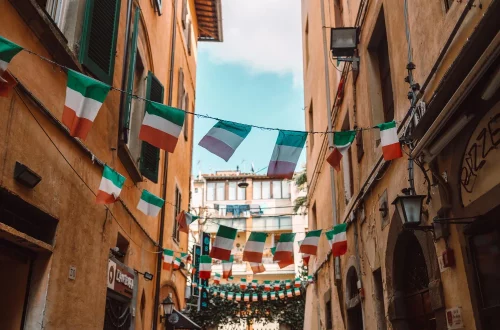




Italian immigration to the United States has a rich and multifaceted history that significantly shaped society and the heritage of American people of Italian descent. The initial waves of migration began in the late 1800s, driven by poor economic conditions in Southern Italy.
Regions like Sicily, Calabria, Apulia, Molise, Basilicata, Campania, and Abruzzo faced dire circumstances, prompting many Italians to seek new opportunities abroad. By 1915, it is estimated that approximately 13 million Italians had emigrated, creating a significant cultural footprint in America.
One of the most prominent areas of Italian settlement was New York City, which, with time, led to the foundation of a small neighbourhood called “Little Italy”. This community became a hub for Italian immigrants, who brought with them their traditions, cuisine, and language.
By 1910, Little Italy was home to around 10,000 Italians, each subsection of the neighborhood representing different towns from their native land. This unique cultural mosaic fostered a sense of identity and community among the immigrants, allowing them to preserve their heritage while integrating into American society.
Take advantage of specialized assistance to secure your passport for a borderless future.
Cultural impacts of Italian immigration
The influence of Italian immigrants on American culture is profound and enduring. Italian cuisine in America, for instance, showcases a rich history of adaptation and innovation. Traditional Italian dishes have evolved to include modern interpretations, offering a unique blend of flavors.
This cuisine’s influence is evident in the prevalence of ingredients like olive oil, balsamic vinegar, and pasta in American kitchens. Dishes such as pizza and spaghetti have become beloved staples across the nation, illustrating the profound impact of Italian culinary traditions on American food culture.
Beyond cuisine, Italian immigrants have left an indelible mark on the arts, music, and entertainment industries. Notable figures like actors Sylvester Stallone, Rober Deniro, and Marisa Tomei have achieved great success in film and television.
In the music industry, artists such as Liza Minelli, Ronnie James Dio, and Tony Bennett have earned widespread acclaim. The presence of Italian-Americans in these fields highlights the diverse talents and cultural contributions of this community.
Italian celebrations and festivals are also a significant part of American cultural life. Events like the Feast of San Gennaro in New York City and the Feast of Our Lady of Mount Carmel in New Jersey celebrate Italian heritage and bring communities together, showcasing traditional music, food, and customs.
Social and economic integration of Italian immigrants
Italian immigrants played a crucial role in the economic development of the United States. They often found work in industrial sectors, such as steel mills, coal mines, and infrastructure projects.
Their contributions to these industries were vital to the growth of American infrastructure and urbanization. Additionally, Italian-Americans established themselves in various trades and professions, further integrating into the fabric of American society.
Take advantage of specialized assistance to secure your passport for a borderless future.
The development of Italo-American communities was instrumental in shaping urban areas. These communities provided a support network for new immigrants, helping them navigate the challenges of adapting to a new culture while maintaining their Italian identity.
Challenges faced by Italian immigrants
Despite their contributions, Italian immigrants faced significant challenges upon arrival in the United States. Early generations encountered prejudice and discrimination, often being viewed with suspicion and hostility. Anti-Italian sentiment was prevalent, and immigrants had to contend with harsh working conditions and low wages.
Adapting to a new culture while preserving their Italian identity was another challenge. Many immigrants worked hard to learn English and integrate into American society, while still holding onto their traditions and customs.
Over time, Italian-Americans successfully balanced these dual identities, enriching American culture with their unique heritage. By working in entertainment, making movies, art and music, Italians became part of the American culture.
Current statistics on American people of Italian descent in the U.S.
Today, Italian-Americans constitute a substantial portion of the U.S. population. It is estimated that around 16 million Americans have Italian ancestry, making it one of the largest ethnic groups in the country. These communities are spread across various states, with significant concentrations in New York, New Jersey, Pennsylvania, California, and Florida.
Take advantage of specialized assistance to secure your passport for a borderless future.
The legacy of Italian immigration continues to shape the cultural and social landscape of the United States. Italian-Americans are actively involved in various sectors, including politics, business, and the arts, contributing to the country’s diversity and dynamism.
Italian citizenship as an opportunity for descendants
For descendants of Italian immigrants, obtaining Italian citizenship presents a valuable opportunity to reconnect with their heritage. There are two main pathways to apply for Italian citizenship jus sanguinis: through consular services or via judicial processes. Each pathway has its own set of advantages and challenges.
As of 2025, to be eligible for Italian dual citizenship, an individual must have an Italian parent or grandparent born in Italy. Alternatively, eligibility may apply if one’s Italian parent—not grandparent—resided continuously in Italy for at least two years.
In both cases, it is essential that the Italian ancestor held exclusive Italian citizenship at the time of their death.
Obtaining dual citizenship offers numerous benefits, including the ability to live, work, and study in Italy and other European Union countries. It also provides access to healthcare and other social services available to Italian citizens. Additionally, dual citizenship enhances international mobility, making it easier to travel and explore opportunities globally.
Exploring one’s Italian roots and obtaining citizenship can be a deeply rewarding experience. For those interested in pursuing this path, services like those offered by io.citizen can provide invaluable support and guidance. With professional assistance, the complexities of the citizenship application process become manageable, allowing you to achieve your goal of becoming an Italian citizen.
Contact io.citizen today and schedule a consultancy!
Take advantage of specialized assistance to secure your passport for a borderless future.