


For decades, the Amalfi Coast has stood as the symbol of Italian coastal glamour—an iconic stretch of cliffs, pastel villages, and winding roads suspended above the Mediterranean. Its fame is well deserved: few places in the world combine such dramatic scenery with a sense of cinematic elegance.
Yet, precisely because of its popularity, many travelers now find themselves searching for destinations that offer the same Italian magic but with more space, more authenticity, and more connection to the land. This is where Puglia and Calabria emerge as compelling alternatives—regions that trade polished luxury for raw beauty, and landscapes that feel wonderfully untouched.
Amalfi Coast: beauty and glamour
The Amalfi Coast is a famously dramatic and glamorous stretch of Italy, defined by its steep cliffs, colorful seaside villages, narrow paths, and beaches reached only by boat or long stairways. From Positano to Vietri sul Mare, visitors encounter domed churches, tiny coves, terraced lemon groves, and iconic viewpoints like Ravello’s Terrace of Infinity.
This makes the Amalfi Coast an ideal reference point for appreciating what regions like Puglia and Calabria offer instead—more space, more authenticity, and landscapes that feel far less curated. Yet its beauty comes with drawbacks: heavy crowds, and high prices due to its touristic nature.
Puglia: rural charm, hidden coastlines, and singular architecture
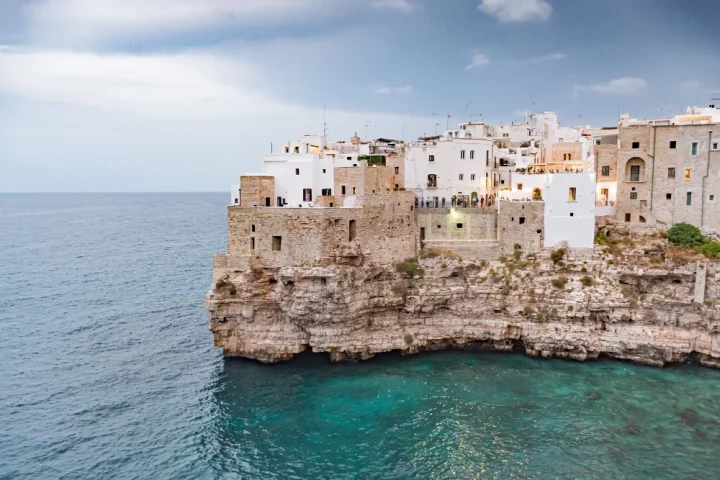
Puglia offers a landscape as captivating as the Amalfi Coast, but with a calmer, more grounded character. Its dramatic shorelines, whitewashed towns, ancient olive groves, and iconic destinations—such as Ostuni, Alberobello, Locorotondo, Polignano a Mare, and Otranto—create a region rich in charm and variety.
Beyond these well‑known highlights, Puglia reveals striking natural wonders like the canyons of the Parco Naturale Terra delle Gravine, the pink salt flats of Margherita di Savoia, and the vivid red terrain of the Otranto Bauxite Quarry. With a coastline that shifts from sandy beaches to rocky coves, the region invites travelers to explore by kayak, wander through vineyards, or discover quiet villages that feel untouched by time.
Its culinary identity is equally compelling, shaped by agricultural traditions and simple, bold flavors. Puglia is home to beloved dishes such as orecchiette with cime di rapa, tiella, and fave e cicoria, as well as regional specialties like burrata, panzerotti, and focaccia barese. Farm stays, olive oil tastings, and hands‑on cooking classes make it easy to connect with local food culture, offering an experience that feels more intimate and authentic than the polished dining scenes of Italy’s more famous coastal destinations.
Take advantage of specialized assistance to secure your passport for a borderless future.
Calabria: wild landscapes and preserved traditions
Calabria stands out as one of Italy’s wildest and most untouched regions, where rugged mountains, dense forests, and time‑worn villages create a landscape of striking contrasts. At its southern edge lies Aspromonte National Park, a biodiversity haven framed by the Ionian and Tyrrhenian seas and recognized by UNESCO for its remarkable geosites. Waterfalls, deep valleys, and remote hamlets make this destination a paradise for hikers and cyclists
Along its 800‑kilometer shoreline, Calabria alternates between dramatic cliffs and tranquil sandy beaches. The Tyrrhenian side features well‑known gems like Tropea, Pizzo, Capo Vaticano, and Scilla, while the Ionian coast offers quieter escapes such as Soverato and Roccella Ionica. Inland, a network of ancient villages—Gerace, Stilo, Caccuri, and others—preserves layers of Greek, Byzantine, and medieval history.
In the north, the Riviera dei Cedri blends mountain scenery with coastal beauty, highlighted by natural wonders like Arcomagno’s turquoise lagoon and the rugged Isola di Dino. Together, these landscapes reveal a Calabria that is culturally rich, visually dramatic, and refreshingly free from mass tourism.
Amalfi vs. Puglia vs. Calabria
Puglia, Calabria, and the Amalfi Coast each showcase a different face of southern Italy: the Amalfi Coast dazzles with its dramatic cliffs, colorful villages, and glamorous, highly touristic atmosphere; Puglia offers a calmer, more grounded charm with whitewashed towns, ancient olive groves, hidden coves, and a rich culinary tradition rooted in simplicity; while Calabria stands out as the wildest of the three, defined by rugged mountains, dense forests, remote villages, and an expansive coastline where dramatic cliffs and quiet beaches coexist.
Together, they form a trio of regions that move from polished beauty to rural serenity to raw, untouched nature.
FAQ
How does the beauty of Puglia and Calabria differ from the Amalfi Coast?
Puglia offers softer landscapes, rural charm, and unique architecture, while Calabria delivers rugged mountains, and wild coastlines. Both feel more authentic and less crowded than Amalfi.
Is it safe to travel alone in Puglia and Calabria?
Yes. Both regions are generally safe for solo travelers, especially in towns and well‑traveled areas. As in any rural region, basic precautions and awareness are recommended.
How much time should I reserve to explore Puglia and Calabria beyond the Amalfi Coast?
For a relaxed trip, plan at least one week in each region—or ten days if combining both—to fully appreciate their landscapes, towns, and cultural depth.