




Few cinematic movements have had as surprising and far‑reaching an impact as the Spaghetti Western. Born far from the deserts of Arizona and New Mexico, this uniquely Italian reinvention of the American Western not only revitalized a fading genre but also transformed Hollywood’s approach to storytelling, character development, music, and visual style.
What began as a low‑budget experiment in the 1960s soon became one of the most influential chapters in film history. To understand how Italy reshaped Hollywood, we need to explore the origins, the visionaries, and the innovations that turned the Spaghetti Western into a global phenomenon.
What defines a Spaghetti Western?
Spaghetti Westerns are a distinctive subgenre of Western films created primarily by Italian directors during the 1960s and 70s. Although the name began as a dismissive label, it has since become a mark of pride for a movement that reinvented the classic American Western.
These films were typically shot on very low budgets—often in the dry landscapes of Spain—and featured international casts. What they lacked in money, they made up for in creativity: bold visual style, heightened drama, and a gritty atmosphere that set them apart from Hollywood’s polished productions.
Unlike traditional American Westerns, which focused on noble heroes and clear moral boundaries, Spaghetti Westerns embraced ambiguity. Their worlds were filled with anti‑heroes, shifting loyalties, and a sense of cynicism that reflected a more modern, skeptical view of justice. Stylized violence, operatic storytelling, and morally complex characters became the genre’s trademarks.
Sergio Leone and the Reinvention of the Western Hero
Sergio Leone’s A Fistful of Dollars (1964) launched the Spaghetti Western boom and introduced a radically different kind of cowboy. The film was the first entry in the “Dollars Trilogy,” followed by For a Few Dollars More (1965) and The Good, the Bad and the Ugly (1966).
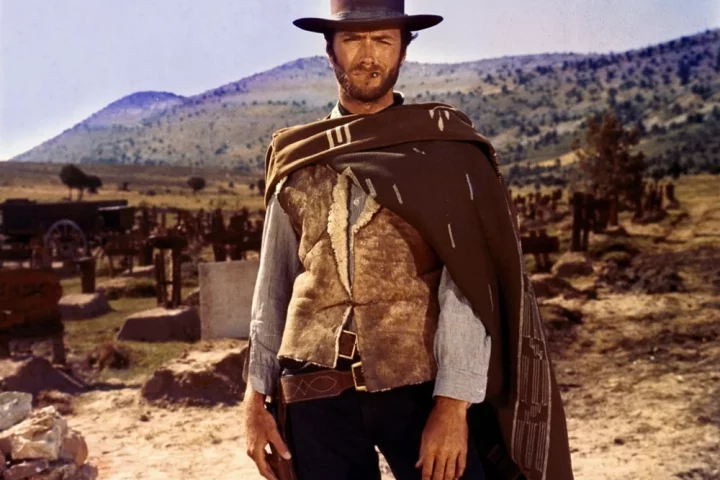
With its striking close‑ups, tense standoffs, and Ennio Morricone’s unforgettable score, it became an unexpected hit and transformed Clint Eastwood—then an unknown TV actor—into the iconic “Man with No Name.” Leone deliberately cast Eastwood for his minimalist, mask‑like presence, and the character’s mysterious, morally ambiguous nature helped redefine what a Western hero could be.
This new style of cowboy—a drifter guided by survival rather than honor—resonated far beyond Italy and the United States. The gritty, stylish anti‑hero became a global pop‑culture figure, influencing comics, video games, and later Westerns like Unforgiven and No Country for Old Men.
As Leone’s Dollars Trilogy gained fame, Spaghetti Westerns developed their own identity, breaking away from Hollywood’s clean‑cut heroes and embracing complex, ruthless protagonists. The genre’s psychological depth and bold visual style reshaped the Western and left a lasting mark on modern cinema.
Take advantage of specialized assistance to secure your passport for a borderless future.
Clint Eastwood and the Rise of the Anti‑Hero Archetype
Before he became one of Hollywood’s most iconic actors and directors, Clint Eastwood was a relatively unknown TV actor. Leone saw something in him that American studios had overlooked: a quiet intensity, a stoic presence, and the ability to communicate volumes with a single glance. Eastwood’s portrayal of the “Man with No Name” became the blueprint for the modern anti‑hero.
This character was a radical departure from the clean‑cut cowboys of earlier decades. He was mysterious, morally flexible, and driven by personal gain rather than justice. Yet audiences loved him. Eastwood’s performance helped shift Hollywood away from idealized heroes and toward more complex, flawed protagonists.
The ripple effect was enormous. The anti‑hero archetype—now common in action films, thrillers, and even superhero movies—owes much of its popularity to Eastwood’s Italian‑born persona. Without Spaghetti Westerns, Hollywood’s heroes might have looked very different today.
Ennio Morricone and the sound that changed cinema
Already an accomplished arranger for major Italian and international singers, Ennio Morricone brought an eclectic mix of high and low culture to his film work. Given complete creative freedom by Sergio Leone, Morricone developed an entirely new musical language that blended classical influences with experimental sounds. His Spaghetti Western scores introduced bold, unconventional elements—whistles, electric guitars, vocal effects, choirs, whip cracks, bells, and distinctive trumpet flourishes.
The result was electrifying. Morricone’s soundtracks didn’t just accompany the action—they shaped it. The music became a character in its own right, heightening tension, deepening emotion, and giving each film a mythic quality. In fact, one theme from The Good, the Bad and the Ugly (1966) may be the most famous Western movie music ever written.
https://www.youtube.com/watch?v=xCXhN1UYje8&list=RDxCXhN1UYje8&start_radio=1
Hollywood took notice. Morricone’s influence can be heard in countless films, from Quentin Tarantino’s work to modern action blockbusters. His approach opened the door for more experimental, expressive film scores and proved that music could redefine a genre.
Visual style and cinematic innovation
Spaghetti Westerns introduced a visual language that felt radically different from Hollywood’s polished productions. Leone and his contemporaries embraced:
- Extreme close‑ups that captured every twitch, bead of sweat, and flicker of emotion
- Wide, sweeping landscape shots that emphasized isolation and danger
- Long, drawn‑out standoffs that built unbearable tension
- Stylized violence that was both shocking and artful
These techniques created a cinematic experience that was both intimate and epic. Hollywood directors soon adopted many of these innovations, integrating them into action films, thrillers, and even science fiction.
The Spaghetti Western proved that bold stylistic choices could elevate genre filmmaking into something operatic and unforgettable.
Hollywood’s transformation and the genre’s lasting legacy
By the late 1960s, the Spaghetti Western had done something remarkable: it revived a genre that Hollywood had nearly abandoned. American studios began producing grittier, more realistic Westerns influenced by Italian style. Directors like Sam Peckinpah, Clint Eastwood, Quentin Tarantino, Robert Rodriguez, and the Coen Brothers all drew inspiration from Leone and his peers.
Today, the Spaghetti Western remains a cultural touchstone—a reminder that innovation can come from unexpected places and that even the most American of genres can be reinvented abroad. Italy didn’t just imitate Hollywood; it transformed it.