



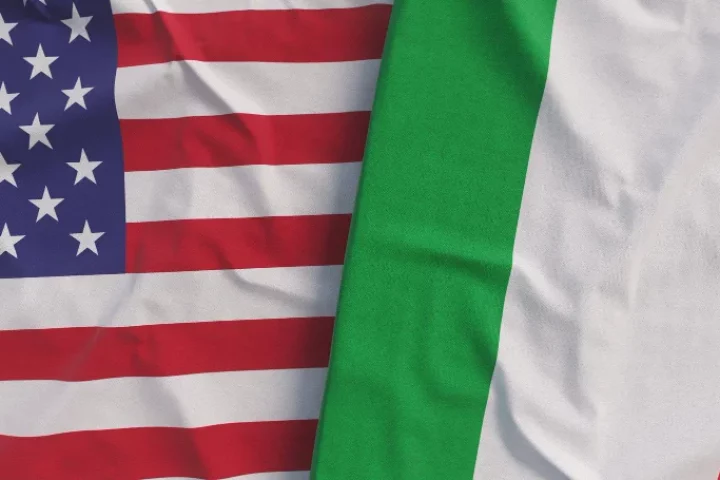
The story of Italian‑American identity begins with a paradox: the very act of migration preserved a version of Italian culture that no longer exists in contemporary Italy. When millions of Italians left the peninsula between the late 1800s and early 1900s, they carried with them regional dialects, culinary habits, religious celebrations, and social values that were deeply rooted in their local communities. Once transplanted to the United States, these traditions became a kind of cultural time capsule. While Italy continued to evolve—politically, linguistically, economically, and socially—the descendants of these migrants maintained practices that reflected the Italy of their ancestors rather than the Italy of today. This phenomenon is central to understanding the modern search for identity among Italian‑American descendants and how it intersects with the legal right to Italian citizenship recognition.
Gastronomy and adaptation: the evolution of Italian food in America
Food is perhaps the most visible example of how Italian‑American culture diverged from modern Italian culture. When migrants arrived in the United States, they encountered an abundance of ingredients—meat, wheat, sugar, and dairy—that were luxuries in many parts of Italy at the time. This abundance reshaped traditional recipes and gave rise to iconic Italian‑American dishes such as Spaghetti with meatballs, Garlic bread, and heavily sauced pasta dishes. These creations, while beloved in the United States, are virtually unknown in Italy, where regional cuisines emphasize simplicity, seasonality, and minimalism.
The contrast is especially clear when comparing American thick‑crust, cheese‑laden pizza to the original pizza napoletana, which follows strict technical rules: a soft, elastic dough, minimal toppings, and a blistered crust baked in a wood‑fired oven. Italian‑American cuisine is not a “wrong” version of Italian food—it is a distinct culinary tradition shaped by migration, adaptation, and the American environment.
Language evolution and the survival of old dialects
Language offers another striking example of cultural divergence. Many Italian‑American families preserved regional dialects—Sicilian, Neapolitan, Calabrian, Venetian—that were spoken by their ancestors before the unification of Italy and before the widespread adoption of standardized Italian. In Italy, the 20th century brought mass education, national media, and linguistic reforms that solidified standard Italian (toscano) as the dominant language. As a result, many dialect expressions (slangs) that survived in Italian‑American communities have disappeared or evolved in Italy itself.
This explains why Italian‑American speech often sounds unusual or “old‑fashioned” to modern Italians. It is not incorrect—it is simply rooted in a linguistic landscape that Italy has since left behind.
Family values and religiosity: identity vs. everyday tradition
Italian‑American communities have long placed strong emphasis on family gatherings, religious feasts, and community celebrations. Events such as the Feast of San Gennaro or elaborate Christmas Eve dinners serve as powerful expressions of identity and cultural continuity. In the diaspora, these traditions often carry symbolic weight—they are acts of cultural preservation and pride.
In Italy, however, many of these celebrations have taken on a more regional, secular, or routine character. While religious festivals remain important in certain areas, they do not always carry the same identity‑affirming purpose they hold in the United States. For descendants, this difference can be surprising: what feels like a deeply sacred or culturally defining event in the U.S. may be experienced in Italy as a local festivity or even a casual social occasion.
Take advantage of specialized assistance to secure your passport for a borderless future.
Mutual perceptions and cultural expectations
A recurring theme in the relationship between Italian‑Americans and native Italians is the cultural mismatch of expectations. Many descendants travel to Italy expecting to find the same traditions, foods, and linguistic expressions they grew up with. Instead, they encounter a modern European country whose culture has evolved in ways that diverge sharply from the Italian‑American experience. Italians, in turn, often view Italian‑Americans with curiosity, affection, and sometimes confusion—especially when descendants claim to be “Italian” while speaking dialectal expressions or referencing traditions that Italians associate with the past.
This cultural encounter can be enriching when approached with openness. Understanding the differences between Italian‑American culture vs Italian culture helps descendants appreciate both sides of their heritage without expecting one to mirror the other.
Identity, roots, and the pursuit of citizenship
For many descendants, reconnecting with their heritage naturally leads to an interest in Italian citizenship. The desire for a European passport is often intertwined with a deeper search for belonging, identity, and historical continuity. Recognizing the hybrid nature of Italian‑American culture helps applicants approach the citizenship process with realistic expectations and a clearer understanding of what it means to reconnect with contemporary Italy—not just the Italy preserved in family traditions.
Citizenship recognition is a legal acknowledgment of a historical link. Understanding the cultural differences between past and present Italy can make the integration process smoother for those who eventually move to the country.
Legislative update: the impact of Decree‑Law 36/2025
The cultural conversation cannot be separated from the legal one. Decree‑Law 36/2025, later converted into Law 74/2025, introduced significant restrictions on citizenship by descent. Under the new rules, only children and grandchildren of Italian citizens born in Italy remain eligible for Italian citizenship. Learn more about Italy's legal landscape.
Frequently Asked Questions
What are the main differences between Italian‑American food and Italian food
Italian‑American cuisine reflects adaptations made in the U.S., while Italian cuisine remains regional, minimalist, and ingredient‑driven.
How does Decree‑Law 36/2025 affect those seeking Italian citizenship
It imposes stricter eligibility rules and limits access for distant descendants.
Why do Italian‑American slangs sound different from modern Italian
Because they preserve older regional dialects that evolved or disappeared in Italy after standard Italian became dominant.