




The Dolomites rise from the northeastern corner of Italy like a natural cathedral—vast, pale, and sculpted by millions of years of geological transformation. For outdoor enthusiasts, this mountain range is a living laboratory of geology, ecology, and alpine culture. Recognized as a UNESCO World Heritage Site, the Dolomites offer a rare combination of dramatic limestone peaks, high‑altitude meadows, and protected wildlife that makes the region one of the most extraordinary destinations in the Alps. For travelers seeking a deep connection with nature, silence, and the rhythms of the seasons, few places in Europe offer such a powerful sense of magnitude and serenity.
A geological masterpiece shaped by time
The Dolomites’ distinctive landscape was shaped over millions of years, beginning with coral and shell deposits that formed in the tropical Tethys Sea during the Triassic period–about 250 million years ago–and later fossilized into the pale dolomite rock seen today. When the African and European tectonic plates collided around 30 million years ago, these ancient reefs were thrust upward into towering peaks, while erosion, volcanic remnants, and sediment from the former seabed created the mix of jagged summits and gentle alpine pastures. The ice ages further sculpted the region with glaciers that carved U‑shaped valleys and left moraines, with the Marmolada glacier now the last surviving remnant. Named after the geologist Déodat de Dolomieu, the Dolomites remain known as the “Pale Mountains,” a testament to their unique geological origins.
High‑altitude ecosystems and protected wildlife
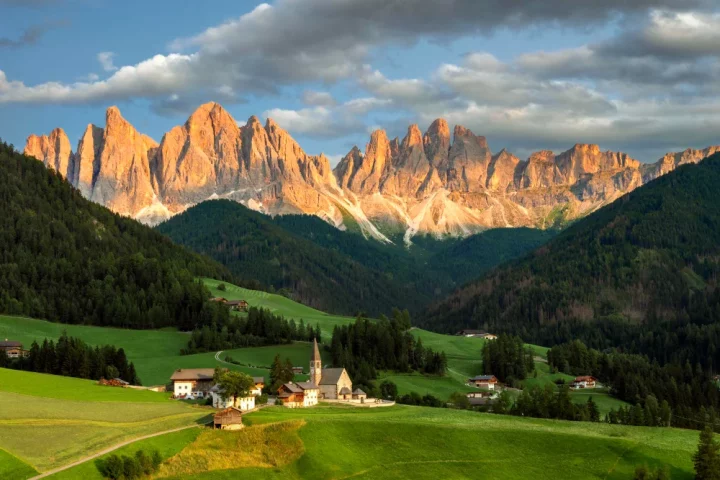
The Dolomites stand out as one of the world’s most striking alpine landscapes, where pale‑limestone cliffs, jagged spires, sweeping terraces, and deep ravines rise dramatically above forests and meadows—a beauty enhanced by the rare mix of dolomite and volcanic rock and by the enrosadira, the pink‑red glow that colors the peaks at sunrise and sunset, a spectacle photography lovers should not miss. Protected through national and regional parks, the region preserves both its geological heritage and its rich biodiversity, hosting wildlife ranging from chamois, red deer, ibex, and marmots to rarer visitors like bears, lynx, and golden jackals, with wolves now firmly established. Golden eagles, black grouse, capercaillie, eagle‑owls, and even the elusive bearded vulture soar above the cliffs, while salamanders, newts, and alpine reptiles thrive in varied microhabitats. This combination of dramatic scenery and exceptional fauna makes the Dolomites one of Europe’s most ecologically and visually remarkable mountain regions.
Seasonal transformations and the rhythm of alpine flora
Spring and summer turn the Dolomites into a vibrant botanical sanctuary, where melting snow reveals carpets of alpine flowers such as gentians, rhododendrons, edelweiss, bellflowers, and the delicate soldanella. Meadows, forests, and rocky slopes each host their own rare species, including the fragrant black orchid and high‑altitude edelweiss, all protected and best admired in places like Val di Fassa, Val di Sole, Val di Non, and Madonna di Campiglio. These blooms not only enrich the landscape with color but also play a role in local culture, appearing in traditional remedies, regional dishes, and even grappa infusions. From late April to August, hikers can witness this floral spectacle while enjoying the scents of larch and spruce forests and photographing the delicate blossoms that thrive in this pristine alpine ecosystem.
Take advantage of specialized assistance to secure your passport for a borderless future.
Immersive outdoor experiences and sustainable tourism
The Dolomites are increasingly recognized as a prime destination for sustainable, experience‑driven travel, with new research showing that visitors value slow, authentic immersion in nature and local traditions more than formal environmental certifications. This shift supports efforts in Belluno and Treviso to strengthen their territorial identity through meaningful storytelling and targeted branding, especially as tourism grows and non‑hotel accommodations expand. Alongside this trend, the region remains deeply committed to nature and climate protection, from safeguarding wildlife in parks like Fanes‑Sennes‑Braies to promoting renewable energy, careful resource use, and low‑impact exploration. Whether hiking, cycling, skiing, or enjoying gourmet routes, travelers can experience the Dolomites through eco‑conscious adventures that highlight pristine landscapes, rich culture, and a strong commitment to preserving this unique alpine environment.
FAQ
What are the rarest animals to spot in the Dolomites?
Some of the most elusive species include the Eurasian lynx, wolf, and golden eagle. The Alpine ibex is easier to observe and is considered a story of conservation success.
How does the enrosadira phenomenon work?
Enrosadira occurs when the low sun reflects off the dolomite rock, whose mineral composition enhances pink and red wavelengths. This creates the glowing effect seen at sunrise and sunset.
Do I need special permits for photographic trails in conservation areas?
Most hiking and photography routes do not require permits, but certain protected zones may have restrictions on drone use, off‑trail access, or professional filming. It’s best to check local park regulations before visiting.