
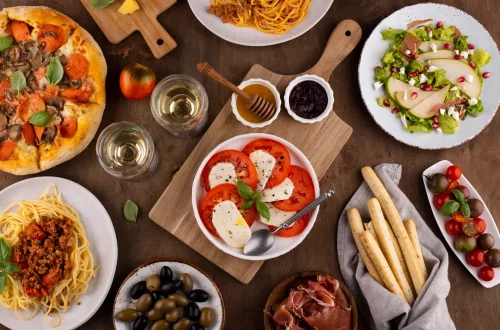

When people think of Italian food, they often picture elaborate pasta dishes and wood-fired pizzas. While these staples are undeniably part of Italy’s culinary identity, they represent only a fraction of its gastronomic heritage. Behind these globally popular dishes lies a humble tradition known as cucina povera, or “poor man’s kitchen”.
Far from being a cuisine of deprivation, cucina povera is a philosophy rooted in resourcefulness, simplicity, and respect for ingredients. It emerged from necessity, shaped by generations of rural families who had limited access to luxury goods but abundant creativity.
The essence of cucina povera lies in making the most of what’s available—transforming modest ingredients into nourishing, flavorful meals with minimal waste.
Technically, cucina povera can be defined as a cooking style that emphasizes seasonal, local ingredients, simple preparation methods, and a zero-waste approach. It’s not about being poor—it’s about being wise with food, honoring tradition, and celebrating the beauty of simplicity.
Origins and principles of cucina povera
The roots of cucina povera stretch back to Italy’s agrarian past, when most families lived off the land and had to cook with whatever they could grow, forage, or trade. In regions like Tuscany, Calabria, and Puglia, where economic hardship was common, this style of cooking became a way of life. It was not driven by culinary trends but by survival and community.
Several core principles define cucina povera:
- Zero waste: Every part of an ingredient is used. Vegetable peels become broth, stale bread turns into soup or salad, and leftover meat is repurposed into stews or fillings.
- Seasonality: Meals are based on what’s in season, ensuring freshness and reducing reliance on imported goods.
- Local ingredients: The cuisine celebrates regional produce—wild herbs, legumes, grains, and olive oil—often grown or sourced nearby.
- Simplicity: Techniques are straightforward, focusing on enhancing natural flavors rather than masking them. Dishes are often cooked slowly, allowing ingredients to shine.
This approach not only reflects economic necessity but also a deep cultural respect for food. In cucina povera, nothing is wasted, and everything has value.
How cucina povera shaped Italian dishes
Cooking in the style of cucina povera embraces creativity and resourcefulness, focusing on making the most of every ingredient. A key principle is minimizing food waste—transforming tired greens into pesto, saving vegetable scraps for broth, or turning stale bread into pangrattato, a crispy breadcrumb topping often called “poor man’s parmesan”.
These practices reflect the tradition’s emphasis on simplicity and sustainability, where nothing is discarded and everything has a purpose in the kitchen.
Another key aspect of cucina povera is the regional variation in pasta-making across Italy. In the wealthier northern regions, such as Emilia-Romagna and Tuscany, fresh pasta is traditionally enriched with eggs.
In contrast, southern Italy embraces a simpler, eggless version made solely with durum wheat flour and water—a reflection of the area’s more modest culinary roots. This minimalist approach highlights the essence of cucina povera: using few ingredients of exceptional quality to create deeply satisfying dishes.
Take advantage of specialized assistance to secure your passport for a borderless future.
Another cornerstone of cucina povera is eating locally and seasonally, a habit born out of necessity for Italian peasants who relied on homegrown produce and bartered with neighbors for what they couldn’t cultivate themselves. This approach not only reduces environmental impact but also enhances flavor and freshness.
Even today, growing herbs like basil, oregano, and rosemary on a windowsill can bring a touch of Italian authenticity to home cooking while honoring the tradition’s roots.
Meat in cucina povera is used sparingly and thoughtfully, often relying on cheaper cuts or offal. The philosophy of “no part of the pig is wasted” still resonates, encouraging slow-cooked dishes like pulled pork ragú that turn humble ingredients into rich, satisfying meals.
Classic recipes such as pasta e fagioli and ribollita showcase how pulses, vegetables, and leftover bread can be transformed into nourishing, flavorful dishes. Once born of necessity, these meals are now celebrated across Italy and featured in fine dining, proving that simplicity and ingenuity never go out of style.
The legacy of cucina povera
Cucina povera is more than a culinary style—it’s a philosophy that teaches us to value simplicity, reduce waste, and connect with the land. In a world increasingly focused on sustainability and mindful eating, its principles are more relevant than ever.
Modern Italian cuisine continues to honor cucina povera, even in upscale restaurants. Chefs reinterpret traditional dishes, using high-quality ingredients while preserving the spirit of frugality and respect. Home cooks, too, embrace its wisdom—choosing seasonal produce, cooking from scratch, and finding joy in the everyday act of preparing food.
Ultimately, cucina povera reminds us that great food doesn’t require extravagance. It requires care, creativity, and a deep appreciation for what we have. From the hills of Tuscany to the kitchens of Calabria, this humble tradition continues to nourish both body and soul.