

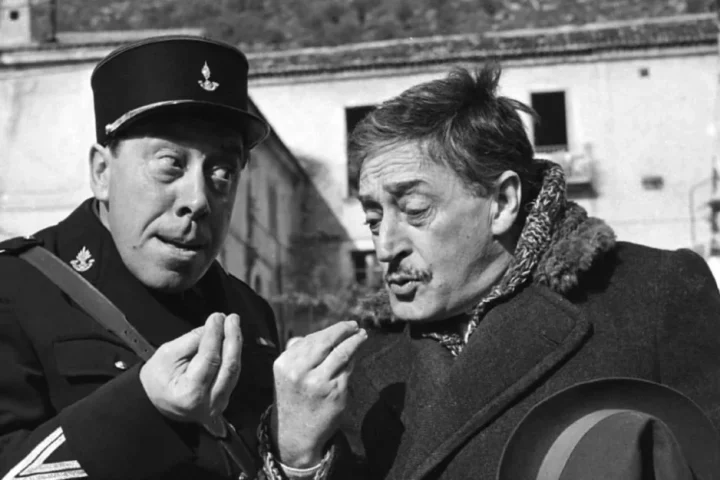
Italian culture is renowned for its passion, expressiveness, and warmth—and nowhere is this more visible than in the way Italians use their hands when they speak. Italian hand gestures are a deeply embedded part of the country’s non-verbal communication. These gestures add nuance, emotion, and clarity to spoken language, often conveying what words alone cannot.
Common Italian hand gestures and their meanings
Italian hand gestures are believed to have originated from centuries of foreign invasions, which brought diverse languages and customs to the region. With no shared spoken language, people relied on gestures to communicate across cultural divides. Influences from Ancient Greeks, Carolingians, Normans, Visigoths, Arabs, and Germans helped shape this expressive non-verbal language, which remains a key part of Italian communication today.
Let’s explore some of the most iconic and widely used Italian hand gestures, each with its own context and cultural significance.
1. The pinch gesture (mano a pinza)
– The pinch gesture, or mano a pinza, is a well-known Italian hand movement where the fingertips are brought together and moved up and down. It typically conveys frustration, disbelief, or emphasis and is often paired with the phrase Ma che vuoi? meaning “What do you want?” Depending on context, it can also express confusion or curiosity.
2. My goodness, how good! (Mamma mia, che buono!)
- Kiss fingertips and flick outward to express delight over delicious food.
- Children may wiggle a finger on their cheek to say che buono.
3. I don’t care (Non mi interessa)
- Flick the back of your fingers from under the chin forward to show indifference.
4. I don’t have any (Non ce n’è / Non ce l’ho)
- Form a gun shape with thumb and index finger, then rotate the wrist side to side.
5. OK!
- Make a circle with thumb and index finger (👌) or give a thumbs-up (👍).
6. Come here! (Vieni qui!)
- Extend hand palm-down and move it up and down to beckon someone.
7. What a stench! (Che puzza!)
- Wave hand in front of nose with a disgusted expression.
8. Somewhat / So-so (Così così)
- Hold hand open and swing it side to side to express uncertainty or mediocrity.
9. I’m hungry (Ho fame)
- Tap fingers together at stomach level to signal hunger.
10. I didn’t hear well (Non ho capito bene / Non ho sentito bene)
- Bring open hand close to ear to ask for repetition or clarification
Take advantage of specialized assistance to secure your passport for a borderless future.
Regional variations, interpretations, and the role of gestures in conversation
Italian hand gestures vary significantly across regions, reflecting the country’s diverse cultural identity. In Southern Italy, gestures are typically more expressive and theatrical. For example, in Sicily and Campania, sliding a finger under the nose signals indifference, while the pernacchia gesture playfully shows contempt. In Puglia, a downward-curved finger suggests negativity or dismissal, and in Calabria, twirling a finger near the temple means “you’re crazy,” often used affectionately.
In contrast, Northern Italian gestures are more restrained and subtle. In Lombardy and Veneto, the side-to-side hand motion for “so-so” is performed with smaller movements. In Piedmont, rubbing the thumb and index finger indicates money or expense, while in Liguria, mimicking a weighing motion with the hand expresses doubt or consideration. These regional differences highlight how gesture use in Italy is shaped by local customs and social norms.
Italian hand gestures are not random or excessive—they are purposeful and integrated into communication. They help clarify meaning, emphasize points, and express emotions that might be difficult to articulate with words alone. In heated debates, gestures become more animated; in storytelling, they add drama and flair.
Italian hand gestures are cultural connectors that bridge emotion, meaning, and tradition. They bring conversations to life, reflect regional identities, and offer a window into the Italian way of being.