


The Italian Alps are among the most sought-after mountain destinations in Europe, attracting travelers with their breathtaking natural beauty and wide variety of activities. Stretching across northern Italy, this vast mountain range offers dramatic peaks, lush valleys, and pristine lakes that create postcard‑perfect landscapes. For visitors, the region provides something for everyone—whether you are an adventurer seeking thrills, a nature lover in search of tranquility, or a traveler eager to immerse yourself in authentic culture. The Alps stand out as a destination where natural wonder and human heritage intertwine, making them a cornerstone of Italy’s tourism.
The geography of the Italian Alps
The Alps, rising nearly five kilometers and spanning 200,000 km² across eight countries, have long served as natural boundaries in European history. Today, they are better known as a destination for leisure, offering activities from skiing in winter to hiking in summer.
In Italy, the Alps extend from the French border at Monte Bianco through Valle d’Aosta, Piedmont, and Lombardy, reaching Trentino Alto-Adige, Veneto, and Friuli Venezia Giulia, where they form the Dolomites. This vast northern region is rich in glacial lakes, ski resorts, and architectural treasures, while its borderlands reflect a blend of French, Germanic, and Slavic cultural influences.
Main destinations in the Italian Alps
The Italian Alps are not a single destination but a mosaic of regions, each offering unique landscapes, traditions, and experiences.
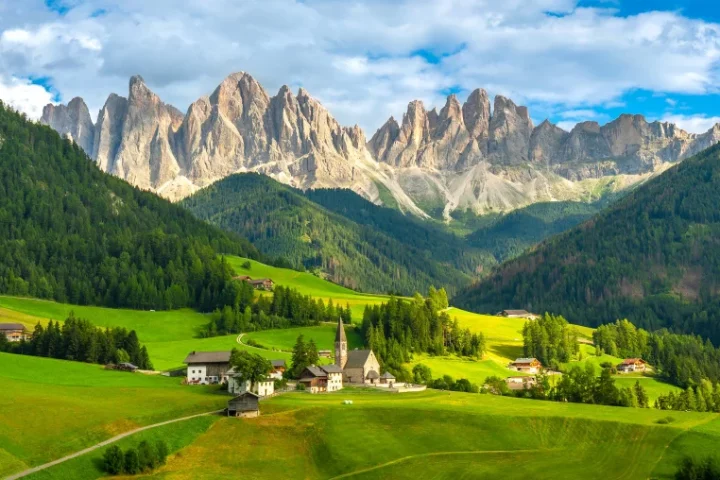
- The Dolomites, known as the “pale mountains,” are a UNESCO World Heritage site in northern Italy, spanning over 141,000 hectares across Trentino Alto Adige, Veneto, and Friuli Venezia Giulia. Famous for their unique geology and the breathtaking Enrosadira phenomenon that colors the peaks red at sunset, they include provinces like Trento, Bolzano, and Belluno, as well as groups such as Brenta and Friuli. The region hosts a national park, nine natural parks, and Italy’s largest ski area, Dolomiti Superski, making it both a natural and cultural treasure.
- Valle d’Aosta, the smallest and least populated region of Italy, lies in the heart of the Alps surrounded by Mont Blanc, Matterhorn, Monte Rosa, and Gran Paradiso—the country’s first national park. Bordering Switzerland, France, and Piedmont, it blends natural beauty with human creativity, showcased in its many castles and charming alpine villages that evoke a fairytale atmosphere.
- Piemonte, literally “foot of the mountains,” is a landlocked region in northwest Italy at the base of the Alps, bordered by Switzerland, France, and neighboring Italian regions. Known for its UNESCO‑listed vineyard landscapes, medieval villages, romantic castles, and serene lakes, it blends cosmopolitan cities with fertile countryside. Famous for skiing—especially the Milky Way area highlighted during the 2006 Turin Winter Olympics—it also offers world‑class gastronomy, rare truffles, fine wines like Barolo, and endless opportunities to explore culture, nature, and luxury.
- Lombardy, a northern Italian region bordering Switzerland and several Italian provinces, is dominated by the Alps and Prealps, which cover about 41% of its territory. Around Bergamo and Brescia lie notable parks, while the hills and lower mountain slopes host diverse forests and Mediterranean vegetation like olive and citrus trees. The Bergamo Alps, formed about 20 million years ago, showcase complex geology with layers of gneiss, limestone, dolomite, and volcanic rocks, reflecting the region’s rich natural and geological heritage.
Each of these regions showcases a different facet of the Alps, ensuring that travelers can tailor their experience to their interests—whether it’s hiking, skiing, cultural exploration, or culinary discovery.
Take advantage of specialized assistance to secure your passport for a borderless future.
Best times to travel to the Italian Alps
The Italian Alps are a year‑round destination, but the best time to visit depends on what you’re looking for.
- Winter (December to March): This is the prime season for skiing, snowboarding, and other snow sports. Resorts across the Dolomites, Valle d’Aosta, and Piemonte welcome winter enthusiasts with well‑maintained slopes and cozy chalets.
- Summer (June to September): Warm weather opens up hiking trails, cycling routes, and opportunities for climbing. Summer is also the season for festivals, where villages celebrate local traditions with music, food, and crafts.
- Spring (April to May) and Autumn (October to November): These shoulder seasons are ideal for cultural tourism and quieter experiences. Travelers can enjoy mild weather, fewer crowds, and landscapes painted with spring blossoms or autumn colors.
Popular activities in the Italian Alps
The Italian Alps offer a wide range of activities that cater to diverse tastes and preferences.
- Adventure and casual sports: The Italian Alps are a year‑round playground, offering everything from family adventure parks and ziplines to skiing, hiking, and classic sports like golf, sailing, and climbing.
- Nature Exploration: Hiking trails wind through valleys, forests, and peaks, offering breathtaking views at every turn. National parks such as The Stelvio National Park and Gran Paradiso National Park protect wildlife and provide opportunities for eco‑tourism.
- Gastronomy: The Italian Alps and Dolomites boast a rich culinary tradition shaped by diverse cultural influences, offering iconic cheeses like Fontina and Montasio, cured meats such as speck, mocetta, and prosciutto di San Daniele, and hearty regional dishes including fonduta valdostana, canederli, polenta, and carbonade. Sweet treats like Montebianco highlight the area’s creativity, making the cuisine a perfect reflection of its alpine heritage and cross‑border flavors.
- Relaxation and Wellness: The Alps are home to numerous spas and wellness retreats, where visitors can unwind with thermal baths, massages, and panoramic views. Combining relaxation with nature makes the Alps a rejuvenating destination.
- Cultural Experiences: Villages host festivals, markets, and events that showcase local traditions. From medieval castles to alpine folklore, culture is woven into daily life in the mountains.
The Italian Alps are a destination that blends natural beauty, cultural richness, and diverse experiences. From the jagged peaks of the Dolomites to the castles of Valle d’Aosta, from Piemonte’s vineyards to Lombardia’s lakes, the Alps offer endless possibilities. Accessible from major cities, welcoming in every season, and filled with activities for all interests, the Italian Alps remain one of Europe’s most captivating travel destinations.