





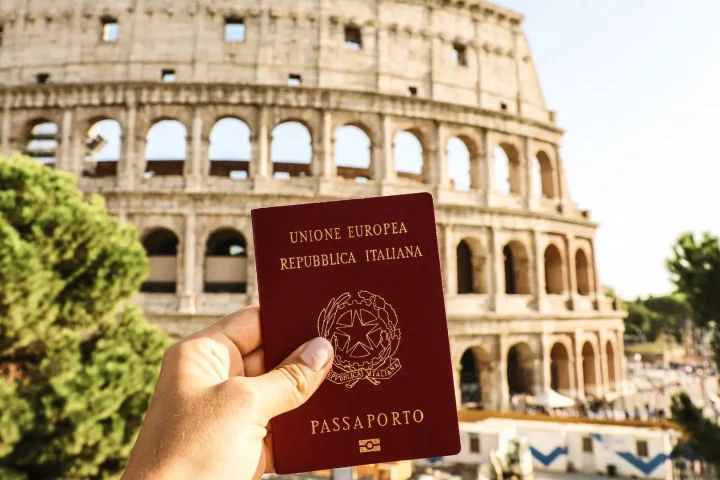
The Italian passport is not just a travel document; it’s a gateway to a world of opportunities. As the official travel document for Italian citizens, it grants the holder unprecedented global access, including visa-free entry to numerous countries. This includes the United States, which allows Italian passport holders to visit for up to 90 days without a visa through the ESTA (Electronic System for Travel Authorization) program. More than a tool for travel, the Italian passport is a powerful symbol of belonging to the European Union (EU). It confers rights such as free movement and residency within EU member states, allowing Italians to live, work, and study across the continent with ease.
Who can apply for an Italian passport?
Eligibility for an Italian passport is strictly limited to those who have recognized Italian citizenship. This can be acquired by birth, descent, marriage, or naturalization. However, simply being of Italian descent does not automatically grant citizenship; it must be legally recognized by Italian authorities. Once citizenship is recognized, individuals must register with AIRE (Anagrafe degli Italiani Residenti all’Estero), a registry for Italians living abroad. This step is crucial for those residing outside Italy, as it ensures they remain in the loop with consular services and are eligible for a passport.
Where and how to apply for the passport?
Applying for an Italian passport can be done both within Italy and abroad, with slightly different processes depending on the location.
- In Italy: Applicants can submit their requests at the comune (municipal office) or the questura (police headquarters) in their local area. The process typically involves filling out an application form, providing required documents, and attending an appointment where biometric data (fingerprints and photographs) is collected.
- Abroad: For those residing outside Italy, the process is handled by Italian consulates. Appointments must be scheduled online through the consulate’s scheduling platform. It’s important to note that each consulate may have specific requirements and procedures, so it’s advisable to check the consulate’s website for detailed instructions.
It’s essential to remember that only individuals with recognized Italian citizenship can apply for the passport. Without this, even those with Italian heritage cannot obtain the document.
Required documentation
The documentation required to apply for an Italian passport is fairly standard, but it’s crucial to ensure all documents are up to date and meet the consulate’s requirements. Generally, the following are needed:
- Passport application form: Complete the form provided by Italian authorities.
- Identity document: This can be an Italian identity card or a certificate of citizenship.
- Proof of AIRE Registration: Necessary for those residing outside of Italy to prove they are registered in the Anagrafe degli Italiani Residenti all’Estero.
- Biometric Photographs: Passport photos that meet specific biometric standards.
- Consular Fees: Payment of the required fees for the passport issuance.
- Payment receipt: Pay the fees related to your application.
It’s a good idea to verify the exact documents needed with the specific consulate or comune in your jurisdiction.
Processing time and validity
The processing time for an Italian passport can vary depending on where the application is made. Generally, the process is quicker within Italy compared to consulates abroad. In Italy, it might take a few weeks, while at consulates, the process can take several months, especially in busy periods.
Validity:
- Adults: Passports are valid for 10 years.
- Minors (3-18 years old): Valid for 5 years.
- Children (under 3 years old): Valid for 3 years.
It’s important to apply for a renewal before the current passport expires to avoid any lapse in validity, which could complicate travel plans.
Renewal and special cases
Renewing an Italian passport follows the same general process as the initial application. Applicants need to provide the same types of documentation and attend an appointment to submit their application. It is advisable to begin the renewal process several months before the passport’s expiration to ensure there’s enough time for processing.
In emergency situations, Italian consulates can issue emergency passports, which have a shorter validity period and can be processed more quickly. These are typically issued for urgent travel needs and are not intended for long-term use. You must also pay an emergency fee for its issuance.
Obtaining or renewing an Italian passport is an important step in securing your ability to travel and take advantage of the benefits that come with Italian and EU citizenship. Once your citizenship is recognized, it’s crucial to begin the passport application process without delay. This ensures you can enjoy the freedom of travel and the rights of EU membership as soon as possible.
For those who have not yet obtained their Italian citizenship, companies like io.citizen can assist in navigating the complex process of citizenship recognition. Don’t let paperwork and bureaucracy stand in the way of your global mobility and opportunities. Start the process today and secure your passport to the world.
Take advantage of specialized assistance to secure your passport for a borderless future.